I'm here in the shop on a Sunday afternoon, listening to Al Green and watching a bout of rain brush the sidewalks with moisture. It's distinctly summer now, and I am reflecting on how I started this season in Japan, just as the lilacs finished blooming here in Boston. Mark and I travelled there together for a little over a week earlier this June, and it still glows in my memory with a kind of shimmering green light and a distinctly fresh and different flavor.

I can't recall where or when I first learned about sansho,
but it's been on my mind for the last five years.
How do I describe the feeling of finally stepping foot on the farm and seeing a sansho pepper tree? My heart fluttered like I'd just met a favorite celebrity. In general, seeing a spice in its native habitat (especially rare ones, like sansho) is so thrilling I can only imagine it's something like a biologist traveling by boat to a specific section of ocean, donning the appropriate gear and then diving in to spy a favorite species of fish.
How do I describe the feeling of finally stepping foot on the farm and seeing a sansho pepper tree? My heart fluttered like I'd just met a favorite celebrity. In general, seeing a spice in its native habitat (especially rare ones, like sansho) is so thrilling I can only imagine it's something like a biologist traveling by boat to a specific section of ocean, donning the appropriate gear and then diving in to spy a favorite species of fish.
But instead of diving underwater we ventured down a narrow winding
road that traced a river and dove through long tunnels carved through
mountains. Already we'd gotten lost and had to call the interpreter we'd hired,
Yoshi, who was meeting us at the farm. We finally found Yoshi on the side of
the road, waiting for us in his black Nissan and he nobly led us the rest of
the way to the farm. Upon arriving, we were both so relieved that we'd made it
(and not too late!) that I barely noticed the small crowd that had assembled
along the side of the farmhouse. After we made introductions Yoshi turned to us
to ask if it'd be alright if our visit was filmed for a local TV show, oh and
also there is a newspaper reporter who'd like to conduct an interview.
Needless to say it was quite the event, and made me feel so
honored that our visit from America was considered so special, since every trip
to origin I make is incredibly important and often I'm not sure how the other
party feels. (Do they care? Am I wasting their time?) In this case, the good
feelings were mutual and I hope to post some clips from the news show in a few
weeks.


We visited the farm on the early side of the harvest, when
the fruit was just beginning to ripen. After the initial formalities were out
of the way the first thing we did was climb a small hill next to the family
rice paddy and pluck a few sansho berries to taste, fresh from the tree.
Immediately I tasted the rush of lemon notes, a zingy, pungent brightness
(almost like raw rhubarb) followed by the familiar buzz or what Harold McGee
describes as "the effect of a mild electrical current." (see p. 429 On Food and Cooking) We then walked up
to the main field, the farmer in his white muck boots with me and Yoshi by his
side, followed by my husband Mark, busy snapping photos, followed by the camera
crew, a local friend named John who was half Japanese half American (another
interpreter, yay!) and the farmer's wife. The field was flat because it used to
be a rice paddy, and it was filled with the small shrubby sansho trees that had
been maturing for ten years before starting to bear fruit. Ten years to start
producing! That's just one reason this spice is so expensive.


We were surrounded by gorgeous green mountains, and the sun
beat down on us as we chatted (slowly, since it was through interpreters) and
there was much picture-taking. Eventually we made our way back to the farm
house, which doubled as a small café and shop where they sold value-added
products like sansho jelly and their own version of Shichimi Togarashi (7
spice) that is the most common blend that uses sansho. The farmer's wife made
us tall glasses of ice water into which she'd mixed a spoonful of sansho jelly
in place of a piece of lemon. She then served us slices of Camembert cheese
(perhaps the only cheese we ate on the trip) dusted with bright green ground
sansho.

Sansho pepper, with its lemony flavor, is most often paired
with rich, oily foods, such as unagi (eel) or in this case with rich dairy
products. I learned that some European chefs who have begun importing the spice
are using it in desserts, because of the bright, perfumy aromatics and the
entertaining effect on the tongue. The TV producer asked me what I expected
Americans to use it on, and I said fish, maybe noodles. I still wonder if he
wanted me to say something surprising, like "on burgers!" But I had
trouble expressing the fact that many Americans, including myself, simply crave the
distinct flavors of Japan.
The visit concluded with my purchase of the sansho pepper,
during which time I also mentioned what a hard time I was having finding good
yuzu peel to use as a spice. Yuzu is a popular citrus fruit in Japan - it looks
like a lemon but is related to a pomelo - and it is famous for its gorgeous
floral aroma, not so unlike Meyer lemon but with more intensity. It turned out they grew that, too, and not
only that but they were one of the few producers in the country who made a highly
aromatic version with no pith (the bitter, white part that is between
the peel and the fruit).

Why sansho was growing here in the Wakayama prefecture no
one was sure, but the farmer said rumors were that it had been brought here by
a monk in the year 900, and was prized for its medicinal, digestive properties.
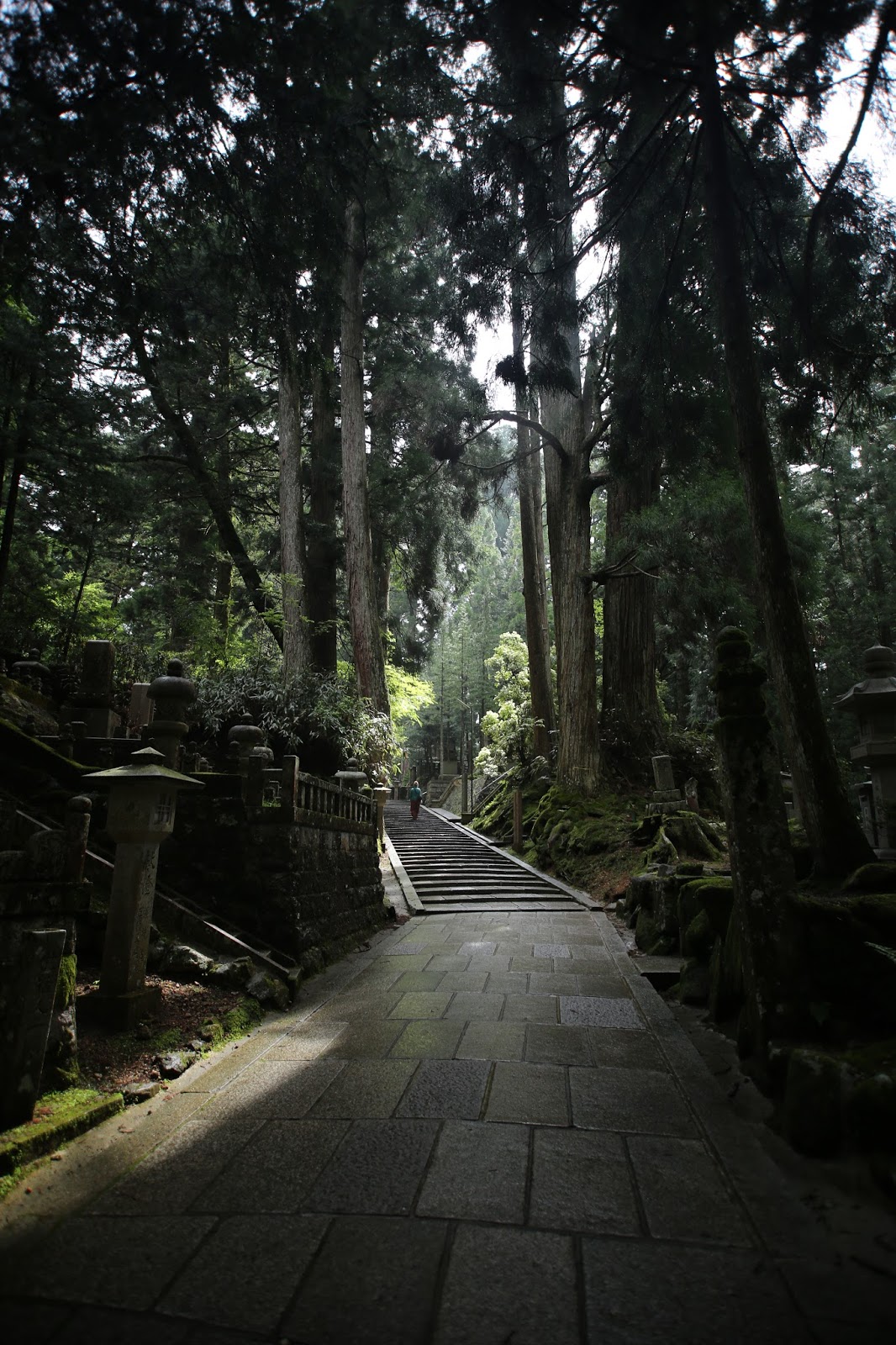
Even though Mark and I had visited several temples, including staying overnight
in one where we woke at 5AM to attend the traditional morning prayer service, I
felt most at peace and most connected to the planet while on the farm. Maybe it
was the smiles of the farmer and his wife, maybe it was the rumple of green
hills or the sun slanting across the rice paddies, but this religious
experience was definitely spice-induced.
About Sansho pepper:
Sansho pepper is a relative of sichuan pepper, so not a true
member of the black pepper family (Piper
sp.) but rather a berry that belongs to a branch of the citrus family,
called Zanthoxylum. These trees are
often called 'prickly ash' and some members of the family (there are 250 or so)
are used for bonsai. The spice bearing members of the family produce a fruit
whose seed pod is valued for the buzzing, numbing, tingly effervescent taste
that it creates. It's the husk of the
seed pod, not the seed itself that's valued; the seed creates a sandy texture
when used in cooking. The reason it's called sansho is that the molecule
responsible for that numbing effect is called "sanshool" and is
actually related to the hot sensation you get from black pepper (piperine) as
well as chile peppers (capsaicin).
Sansho (Zanthoxylum
piperitum) is different from sichuan (Zanthoxylum simulans) primarily for
its distinct lemon flavor, like fresh lemon rind. Its main harvest is in the
summer, when the seed pods are ripe but still a bright green, and it's dried
very slowly in dehydrators. Sichuan on the other hand is usually harvested
later in the season and dried in the sun so it turns brown (or reddish-brown)
and has a more roasted flavor.
Usage:
The most common appearance of sansho is in the popular spice
blend 'shichimi togarashi' or Japanese 7 spice, used as a table seasoning
throughout Japan for anything from ramen to sushi. It's used on its own to
season grilled eel (which is quite oily and rich) but it can also be used on
rice salads, green summer salads, soba or rice noodles, grilled salmon, grilled
mushrooms and more!
Recipes coming soon.